

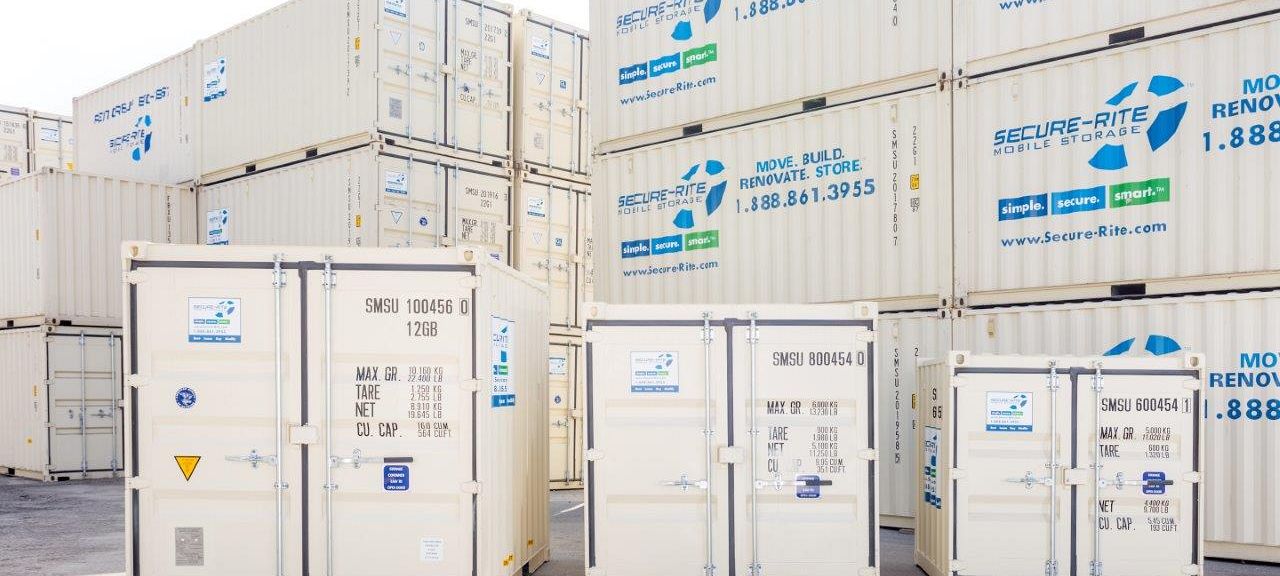
What Size of Container Do You Need?
Shipping Container Sizes for Homes: Complete Guide to Storage Solutions
Moving can be overwhelming, but choosing the right shipping container sizes for homes doesn't have to be. Whether you're relocating from a studio apartment or a sprawling five-bedroom house, understanding container dimensions and capacity makes your move smoother and more cost-effective.
Understanding Container Size Options
The right container size depends on three key factors: the volume of items you're moving, the space available for delivery, and how long you'll need the storage solution. At Secure-Rite, we offer flexible container options designed to match your specific needs, from compact 10-foot units to spacious 40-foot containers.
20-Foot Containers: The Popular Choice for Family Homes
How much furniture can fit in a 20 foot container? Our 20-foot container is the most popular choice across Western Canada, and for good reason. This versatile unit comfortably holds the entire contents of a 3-bedroom home, including all furniture, boxes, and major appliances.
Dimensions: 20' long × 8' wide × 8.5' high
Best For:
- Three-bedroom homes (complete contents)
- Two-bedroom homes with extra furnishings
- One-bedroom plus den with extensive décor
- Small business inventory and equipment
- Renovation projects requiring temporary storage
The 20-foot container offers 160 square feet of floor space—think of it as a room roughly the size of a large master bedroom. We can position it in your driveway, alongside your house, or even on the street (permit required through your municipality).
10-Foot Containers: Compact Solutions for Smaller Spaces
The 10-foot container is our second most popular option, ideal when you're working with a more manageable inventory. This size efficiently stores the contents of a one-bedroom apartment or condominium without excess space.
Dimensions: 10' long × 8' wide × 8.5' high
Perfect For:
- One-bedroom apartments and condos
- Studio apartments with moderate furnishings
- Partial home contents during staging
- Seasonal item storage
- Small office relocations
With 80 square feet of capacity, you'll have room for a bed, couch, dining set, and numerous boxes of household items, clothes, and kitchenware.
40 Ft Container: Heavy-Duty Storage for Large Moves
How much furniture can fit in a 40 foot container? Our 40 ft container is the ultimate solution for substantial residential and commercial moves. This industrial-strength container accommodates the full contents of a four- to five-bedroom house or an entire commercial setup.
External Dimensions: 40' long × 8' wide × 8.5' high
Ideal Applications:
- Four to five-bedroom houses (complete contents)
- Full commercial relocations with shelving and machinery
- Warehouse overflow and inventory storage
- Industrial site equipment
- Large-scale business moves including pallets
The 40 ft container provides 320 square feet of storage space—double the capacity of our 20-foot unit. While it requires more room for delivery and placement, it offers unmatched capacity and the best cost-efficiency per square foot for bulk storage needs.
Pro Tip: For most residential moves involving four or more bedrooms, we actually recommend combining one 20-foot container with one 10-foot container rather than using a single 40 ft container. This configuration provides easier access to your belongings and more flexible placement options on your property.
Custom Container Solutions Beyond Standard Storage
Shipping container sizes for homes aren't just about moving and storage anymore. Modified containers offer creative solutions for:
- On-site offices and mobile workshops
- Pop-up retail spaces and seasonal businesses
- Custom studios and creative spaces
- Unique architectural projects
- Secure equipment storage with modifications
Smart Container Selection Strategy
Unsure which size you need? Start with one container and monitor your progress. Once you've packed it about ¾ full, you'll have a clear picture of whether you need additional space. This approach prevents over-ordering while ensuring you have adequate room for all your belongings.
Quick Assessment Questions:
- Are you bringing major appliances like refrigerators or stoves?
- Do you have outdoor furniture, BBQs, or patio sets?
- Are there contents in sheds or garages—lawnmowers, tools, seasonal equipment?
- Do you have business inventory, filing cabinets, or office equipment?
Visualization Technique: Try to picture whether your belongings would fit in a 10' × 8' space (about 2.5 parking spaces) or a 20' × 8' space (roughly 5 parking spaces).
Multi-Container Solutions for Larger Homes
For homes with four or more bedrooms, we typically recommend multi-container approaches:
- Average 4-bedroom home: One 20' container + one 10' container
- Large 4-5 bedroom home: Two 20' containers
- Estate homes with outbuildings: Multiple 20' containers or customized solutions
The beauty of our multi-container approach is flexibility. You're not locked into sizing decisions before you start packing. As your needs become clearer, simply call us at 1 (250) 861-3955, and we'll deliver additional units with the industry's fastest turnaround times.
Why Size Matters: Cost and Efficiency
Choosing the right shipping container sizes for homes impacts both your budget and moving efficiency:
- Right-sized containers minimize wasted space and reduce costs
- Multiple smaller containers offer better access than one oversized unit
- Properly matched capacity prevents damage from over-packing
- Adequate space eliminates the stress of running out of room mid-move
Frequently Asked Questions About Container Sizes
How much furniture can fit in a 20 foot container?
A 20-foot container typically holds the complete contents of a three-bedroom home, including all furniture, boxes, and major appliances. This includes bedroom sets, living room furniture, dining room pieces, kitchen appliances, and numerous boxes of household items. The 160 square feet of floor space can accommodate approximately 3-4 rooms worth of furniture plus belongings.
How much furniture can fit in a 40 foot container?
A 40-foot container accommodates the full contents of a four to five-bedroom house, including all furniture, appliances, and belongings. With 320 square feet of storage capacity, it can hold everything from multiple bedroom sets to large commercial equipment, shelving units, and inventory. However, for residential moves, two 20-foot containers often provide better flexibility than one 40-foot unit.
What are the standard shipping container sizes for homes and moving?
The three most common shipping container sizes for homes are:
- 10-foot containers (10' × 8' × 8.5'): Holds 1-bedroom apartment contents
- 20-foot containers (20' × 8' × 8.5'): Holds 2-3 bedroom home contents
- 40-foot containers (40' × 8' × 8.5'): Holds 4-5 bedroom home contents
All containers are 8 feet wide and 8.5 feet tall, providing consistent access and doorway dimensions while varying in length to match different capacity needs.
Is a 40 ft container too big for residential use?
A 40 ft container can be excellent for large homes or commercial moves, but it may present challenges for residential properties. The main considerations include:
- Space requirements: Needs significant clearance for delivery and placement
- Access limitations: Items at the far end can be difficult to reach
- Property restrictions: May not fit in standard driveways or along residential streets
- Municipal permits: More likely to require special permissions
For most 4-5 bedroom homes, combining two 20-foot containers offers better accessibility and placement flexibility.
How do I calculate what container size I need for my home?
To determine the right container size:
- Count your rooms: Generally, one 10-foot container = 1 bedroom, one 20-foot = 2-3 bedrooms
- Consider your furnishings: Heavily furnished homes need extra space
- Include everything: Don't forget appliances, outdoor items, garage/shed contents
- Add 20% buffer: Leave room for items you haven't accounted for
Alternatively, call Secure-Rite at 1 (250) 861-3955 for a free consultation. Our team can help assess your specific needs based on your home size and inventory.
Can I rent multiple shipping containers for one move?
Yes! Renting multiple containers is often more practical than using one oversized unit. Benefits include:
- Better organization: Separate containers for different rooms or item types
- Easier access: No need to unpack the entire container to reach items at the back
- Flexible placement: Position containers in different locations on your property
- Staged delivery: Get containers as you need them rather than all at once
- Cost efficiency: Pay only for the capacity you actually use
Most four-bedroom homes use one 20-foot and one 10-foot container, while larger estates may require multiple 20-foot units.
What's the difference between storage container sizes and shipping container sizes?
Storage containers and shipping containers are typically the same thing—industry-standard cargo containers repurposed for moving and storage. All Secure-Rite containers follow ISO (International Organization for Standardization) specifications:
- Weatherproof construction: Steel walls, roof, and floor
- Secure design: Locking mechanisms and durable doors
- Standard dimensions: 8-foot width allows for consistent doorways and forklifts
- Intermodal capability: Can be transported by truck, ship, or rail
The term "storage container" simply refers to how you're using the shipping container—for temporary or long-term storage rather than international cargo transport.
How quickly can Secure-Rite deliver a container to my location?
Secure-Rite offers the industry's fastest delivery times across Western Canada. After you select your container size, we can typically deliver within:
- Same-day or next-day for standard 10' and 20' containers in urban areas
- 2-3 business days for 40-foot containers or remote locations
- Immediate deployment for emergency situations or urgent moves
Call 1 (250) 861-3955 to check availability for your specific location and timeline. If you need additional containers mid-move, we'll deliver promptly so your packing and moving schedule stays on track.
Do I need a permit to place a container on my property?
Permit requirements vary by location:
Private property (driveway/yard): Generally no permit required, though some municipalities have size or duration restrictions
Street placement: Almost always requires a permit from your city or municipality, including:
- Traffic management considerations
- Duration limitations (typically 72 hours to 2 weeks)
- Visibility and safety requirements
- Potential fees ($50-$200 typically)
Commercial locations: May require business permits or zoning clearances
Your municipality can advise on local requirements for your specific location. We recommend starting the permit process a few weeks before your planned delivery date for street placements.